
Thermal imaging
This service is included at FREE of charge with all inspections we perform and is also available as a stand-alone service.
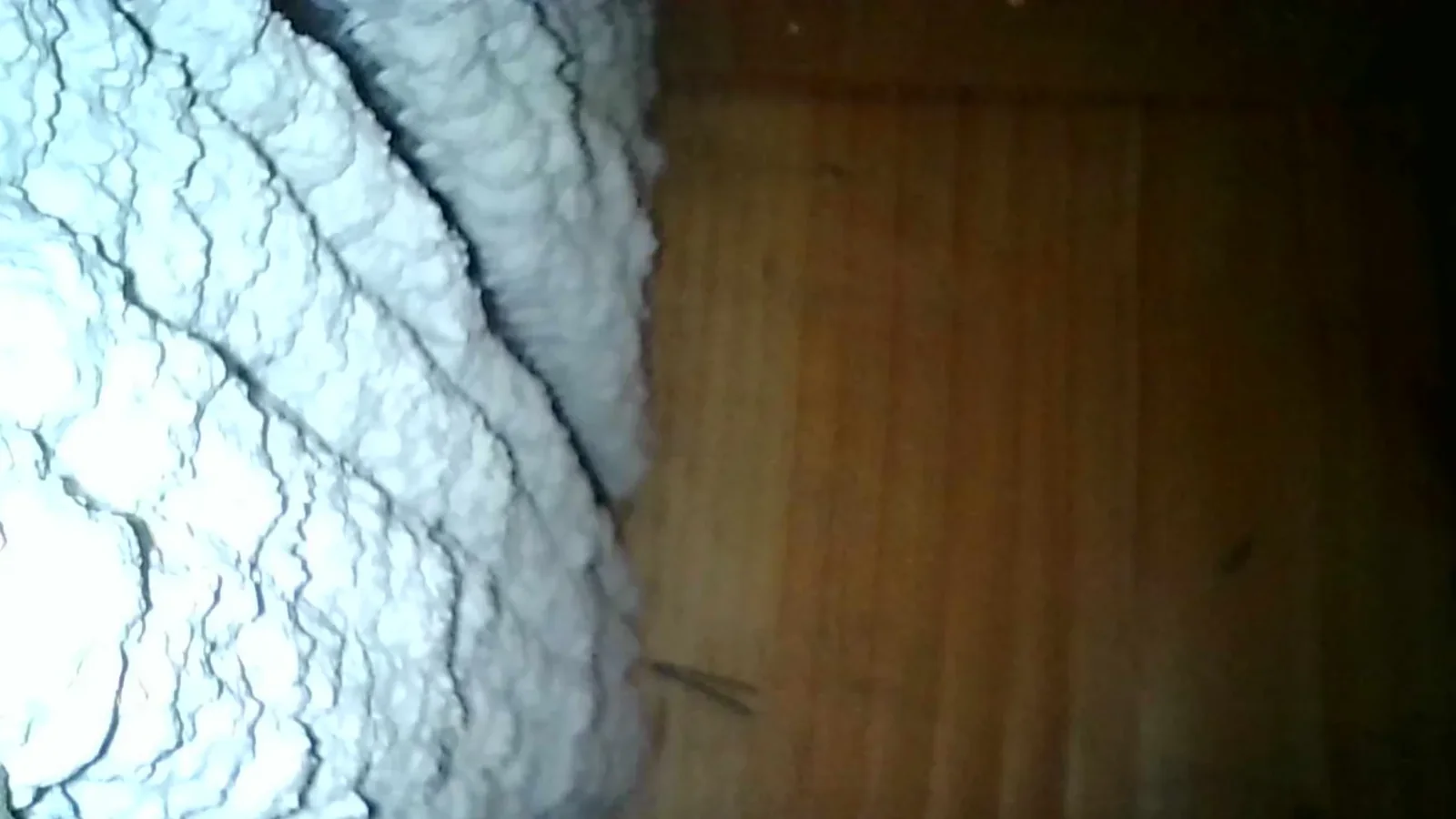
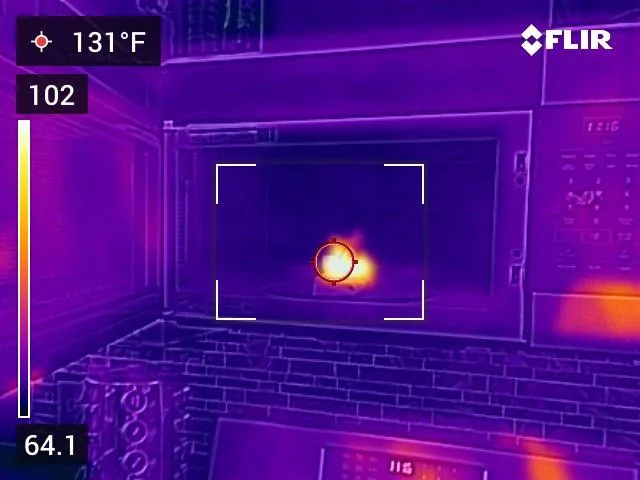
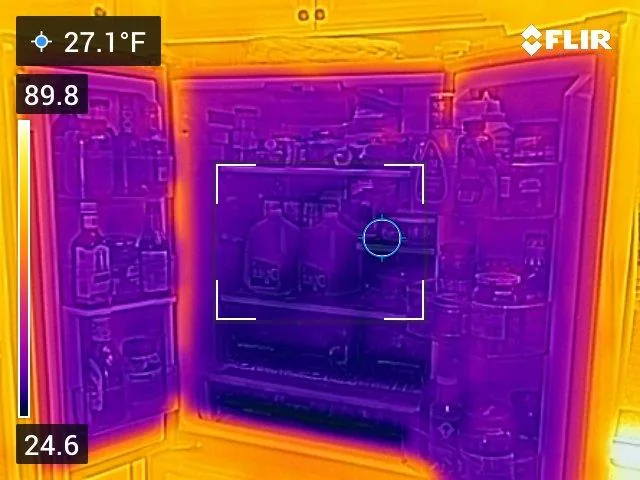
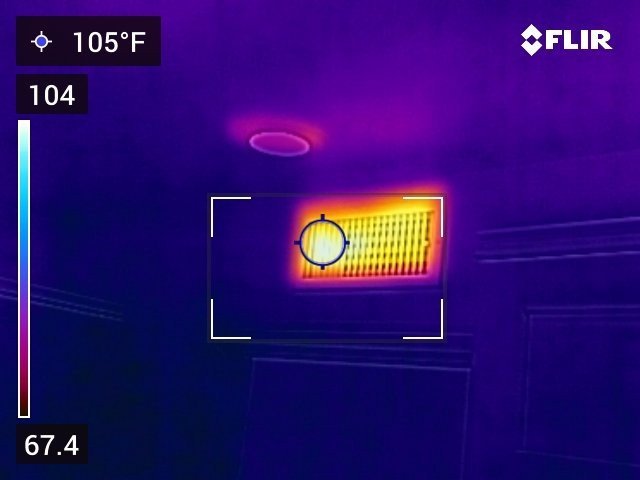
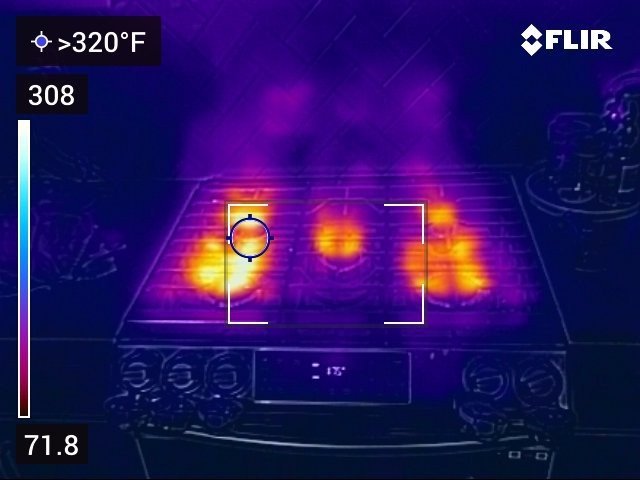
Thermal moisture scans
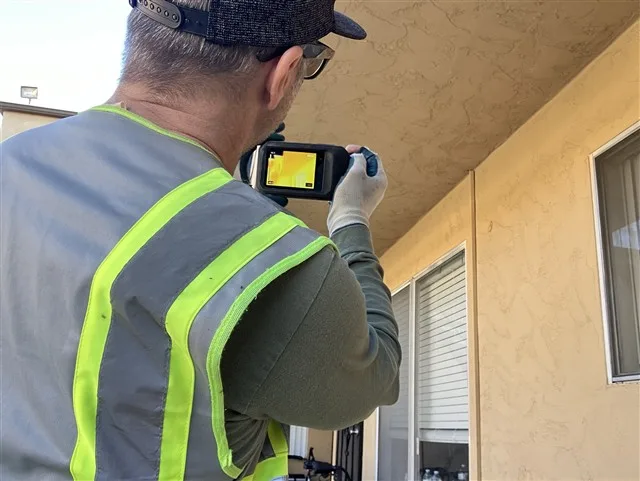
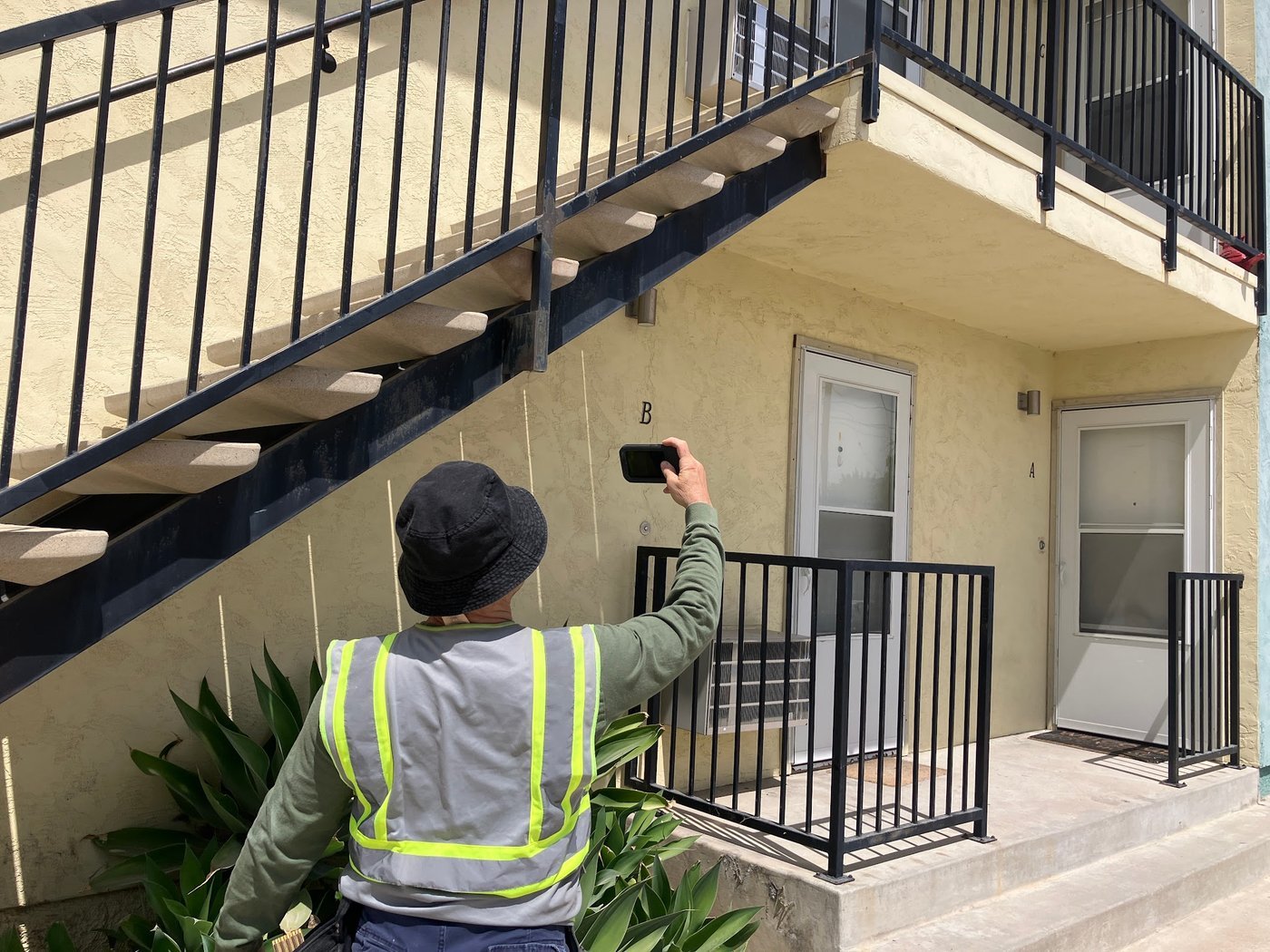
This service is included at FREE of charge with all inspections we perform and is also available as a stand-alone service. Thermal imaging / infrared (IR) cameras are high tech electronic tools that utilize sensors which allow us to read thousands of surface temperatures at once. This is a valuable service for those concerned about hidden moisture, slab leaks, HVAC performance, missing insulation, or electrical wiring resistance.
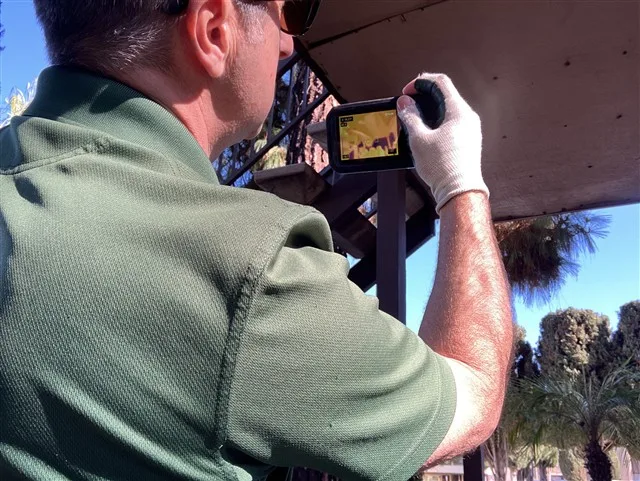
In 2008 our company became the first local property inspection company to use IR cameras on home inspections. We were motivated by the desire to provide even more value for our clients. Our first cameras were a huge investment, costing more than all of our other gear combined. In addition, our inspectors were trained by FLIR on how to properly use this technology to evaluate building performance, and over the years since, we have perfected the use of this technology.
Joe discovered the foundation was completely shot. Thankfully the seller agreed to pay for the repairs.

Photo reports
After completing our inspection, we will provide you with a complete digital report that includes images, thermal scans, and descriptions of all our findings. Despite being thorough, this report is easy to understand. With all this clear information, this report can be a powerful tool in the negotiation or repair process.
What Is a Thermal Imaging Inspection?
A thermal imaging inspection in San Diego uses a professional-grade infrared (IR) camera to reveal temperature differences across walls, ceilings, floors, and electrical components that are completely invisible to the naked eye. Because moisture, missing insulation, overloaded circuits, and air leaks all change how a surface holds and releases heat, an infrared scan can expose hidden problems without cutting into drywall or disturbing your home. At San Diego Home Inspection, Inc., infrared scanning is performed by InterNACHI Certified Professional Inspector Joseph Romeo as a non-invasive diagnostic layer on top of a standard visual inspection. It does not see through walls or detect mold spores directly. Instead, it maps the thermal patterns those conditions create, giving us a roadmap of exactly where to look closer.
From booking to report
1
Establish Thermal Conditions
Infrared imaging depends on a temperature differential. We assess interior and exterior conditions, run HVAC where needed, and identify areas worth scanning. San Diego's mild Mediterranean climate means differentials can be small, so timing and technique matter, work that benefits from experience reading coastal homes.
2
Scan Systematically
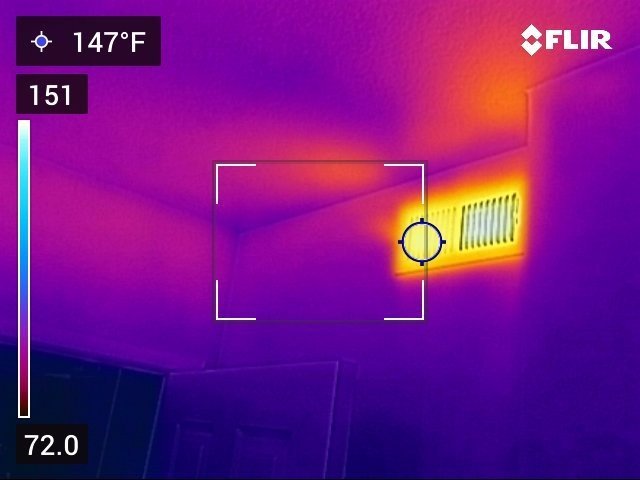
We move methodically through living spaces, wet areas, the attic, electrical equipment, and the building envelope. The camera surfaces anomalies, the cool blooms of evaporative moisture or the bright signatures of an overheating breaker, so nothing is left to guesswork.
3
Verify Every Anomaly
A thermal anomaly is a clue, not a conclusion. Temperature differences can come from plumbing, sunlight, framing, or genuine defects. We confirm suspected moisture with a calibrated moisture meter and correlate electrical hot spots with the panel inspection before anything goes in the report.
4
Document and Explain
You receive infrared images paired with plain-English explanations. Same-day digital reports are typical, and we walk you through what each finding means and how urgent it is.
What's Included
Everything below is in the written report.
- Ceilings and walls for hidden moisture intrusion and active water staining
- Around windows, doors, skylights, and roof penetrations for leak signatures
- Bathrooms, under sinks, and behind shower walls for slow plumbing leaks
- Missing, settled, or improperly installed insulation in walls and ceilings
- Air leaks and thermal bypasses that drive up energy bills
- Electrical panels, breakers, and circuits for overheating hot spots
- Recessed lighting and junction boxes for abnormal heat
- Flooring and slab areas for moisture or hidden supply-line leaks
- Evidence of past or active roof leaks beneath the marine layer's damp ceilings
- HVAC ducting for disconnects, blockages, and air distribution problems
- Confirmation that suspected problem areas are corroborated with a moisture meter
Thermal imaging: questions we get
Can a thermal camera see through walls?
No. Infrared only reads surface temperatures. It detects the thermal patterns that hidden moisture, missing insulation, or hot electrical components leave on a surface, which tells us exactly where to investigate further. It does not provide x-ray vision.
Does thermal imaging detect mold?
Not directly, infrared finds moisture, and moisture is what mold needs to grow. In our damp marine-layer climate, locating hidden moisture early is the single best way to catch conditions that lead to mold before it spreads.
Is an infrared scan a substitute for a full home inspection?
No. It is a powerful add-on that enhances a visual inspection, not a replacement. We always verify thermal findings with a moisture meter and correlate them with the rest of the inspection before reporting.
Why is thermal imaging useful in San Diego specifically?
Low rainfall hides roof and plumbing leaks for months, the marine layer keeps things damp, and coastal salt air corrodes electrical connections. Infrared surfaces all three patterns, problems that often stay invisible in our dry, mild climate until they're expensive.
When is the best time to scan?
Anytime there's a usable temperature difference between problem areas and their surroundings. We assess conditions on arrival and run HVAC if needed to create the differential, so scans stay productive year-round in San Diego.
What is a thermal imaging inspection?
A thermal (infrared) imaging inspection uses an infrared camera to read surface temperature differences across walls, ceilings, and floors. Those patterns reveal conditions hidden from the naked eye, like moisture, missing insulation, or overheating electrical components. At The Real Estate Inspection Company, our InterNACHI Certified inspector adds thermal scanning to a standard San Diego home inspection for a deeper, non-invasive look.
What does an infrared camera actually detect during a home inspection?
An infrared camera detects temperature anomalies that point to real problems: moisture intrusion and active leaks behind walls, missing or settled insulation, air leakage around windows and doors, and overheating breakers, wiring, or connections. It also helps flag suspected radiant-heat or plumbing leaks. Thermal imaging shows where to look closer; it doesn't see through walls or guarantee every defect.
Who needs a thermal imaging inspection in San Diego?
Thermal imaging benefits buyers, sellers, and owners who want extra assurance, especially with San Diego's coastal salt-air moisture in La Jolla, Coronado, and Ocean Beach, or marine-layer humidity that drives hidden mold and corrosion. It's also valuable for older homes, properties with past water damage, or before closing escrow. Call (619) 752-4399 to add infrared scanning to your inspection.
Inspections that rely on infrared

Your home is a major investment.
Protect it with San Diego's certified, 5-star-rated inspectors.
